Sep 10, 2026Industry Insights
2.4G vs Bluetooth vs RF433: Choosing the Right Remote Protocol
IR, RF 433 MHz, 2.4G, Bluetooth, Tuya, Zigbee — what each protocol actually buys you in range, two-way feedback and app ecosystems, and how to match them to lighting, fan and appliance SKUs.
Your fixture team asks for “a remote” and the RF team asks “which radio?” — and the wrong answer either inflates the bill of materials or strands your SKU without two-way status. Here is what each protocol actually buys you, and how to match it to lighting, fan and appliance products.
The protocol is a product decision
The radio inside a remote defines its range, latency, battery life and whether your fixture can join a smart-home ecosystem. Treat it as a feature, chosen per SKU.
IR: lowest cost, line of sight
Infrared remains the cheapest option for basic on/off and dimming where the remote points at the fixture. No pairing, no network, minimal bill of materials.
RF 433 MHz: through-wall range, one-way
433 MHz links pass through walls and furniture with modest power draw, which is why wall-mounted wireless panels and fan controls rely on it. Feedback to the remote is limited, so state is shown on the fixture or via a segment display.
2.4G: fast, two-way, rich displays
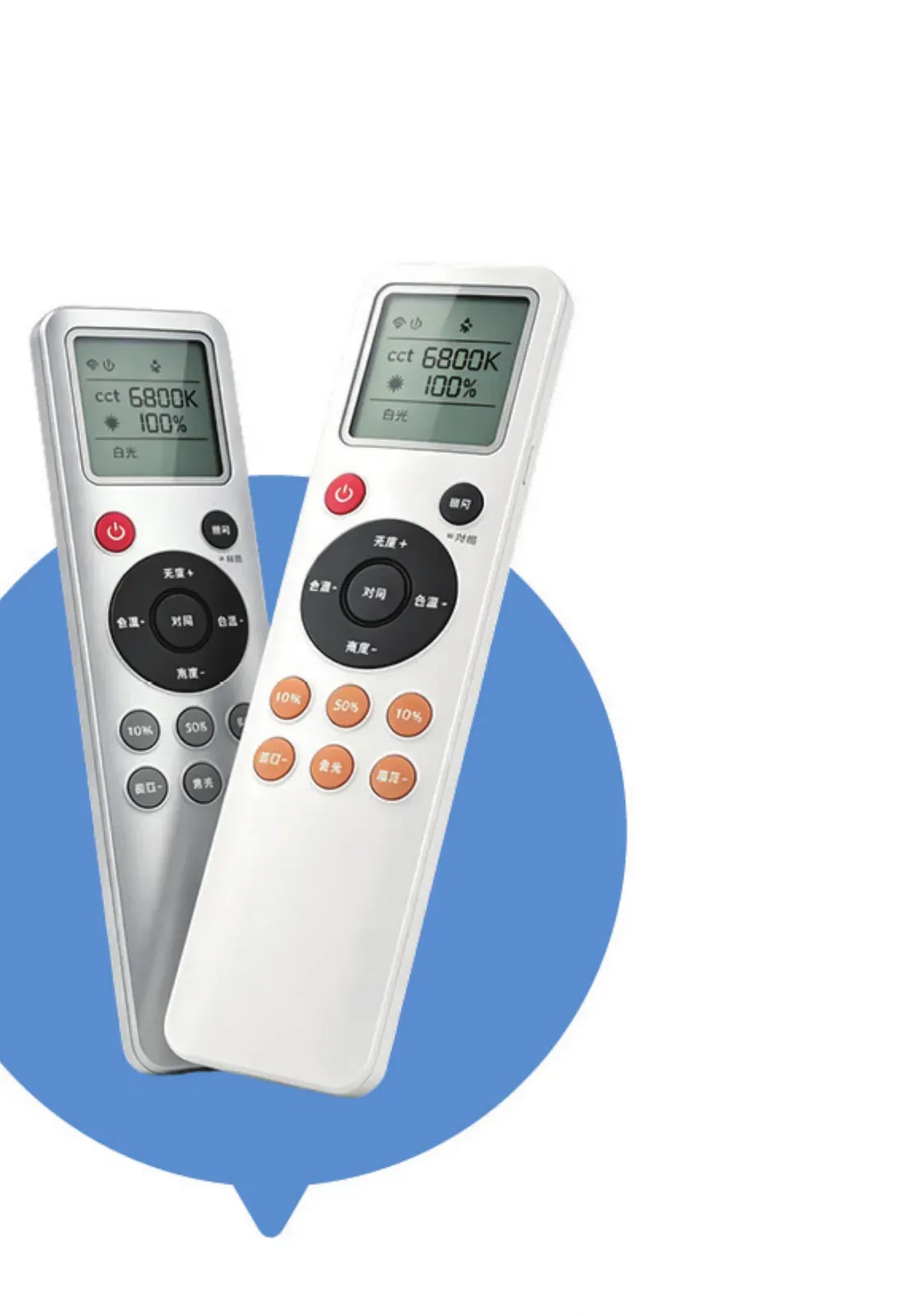
2.4 GHz radios support quick two-way links that drive LED/LCD status screens on the remote — CCT value, brightness percentage, timer. This is the workhorse for modern ceiling fan lights and lighting remotes.
Bluetooth, Tuya and Zigbee: ecosystem entry
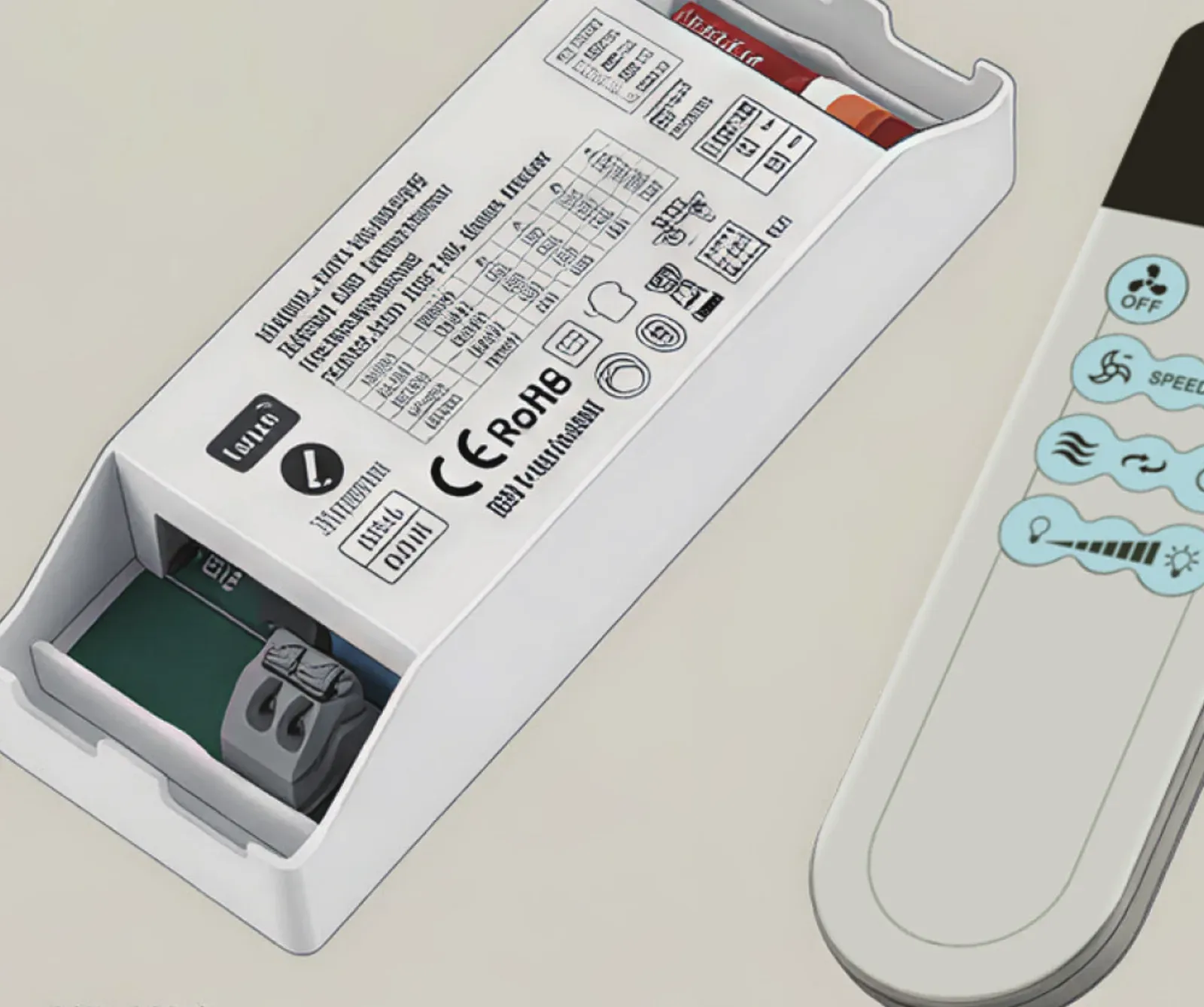
Bluetooth enables direct phone pairing; Tuya connects your SKU to a mainstream global app ecosystem; Zigbee fits whole-home automation hubs. LED drivers with Tuya & Bluetooth support, for example, make a fixture smart without changing the switch.
How to decide
Start from the use case: basic replacement remotes survive on IR or 433; feature remotes with displays want 2.4G; app-connected product lines add Bluetooth/Tuya/Zigbee. A full-band manufacturer can prototype two options in parallel so you can test before committing tooling.
Next Step
Ready to move? Shortlist two protocols for your next SKU and prototype both against the same housing. A full-band manufacturer can quote both variants side by side — send the requirement sheet through the contact page to compare cost, range and battery life before committing tooling.